1
In-clinic whitening
A professionally applied whitening system can produce a faster change in colour. Gum protection and sensitivity management are important parts of the appointment.
Professional whitening for a brighter smile, planned around tooth and gum health.
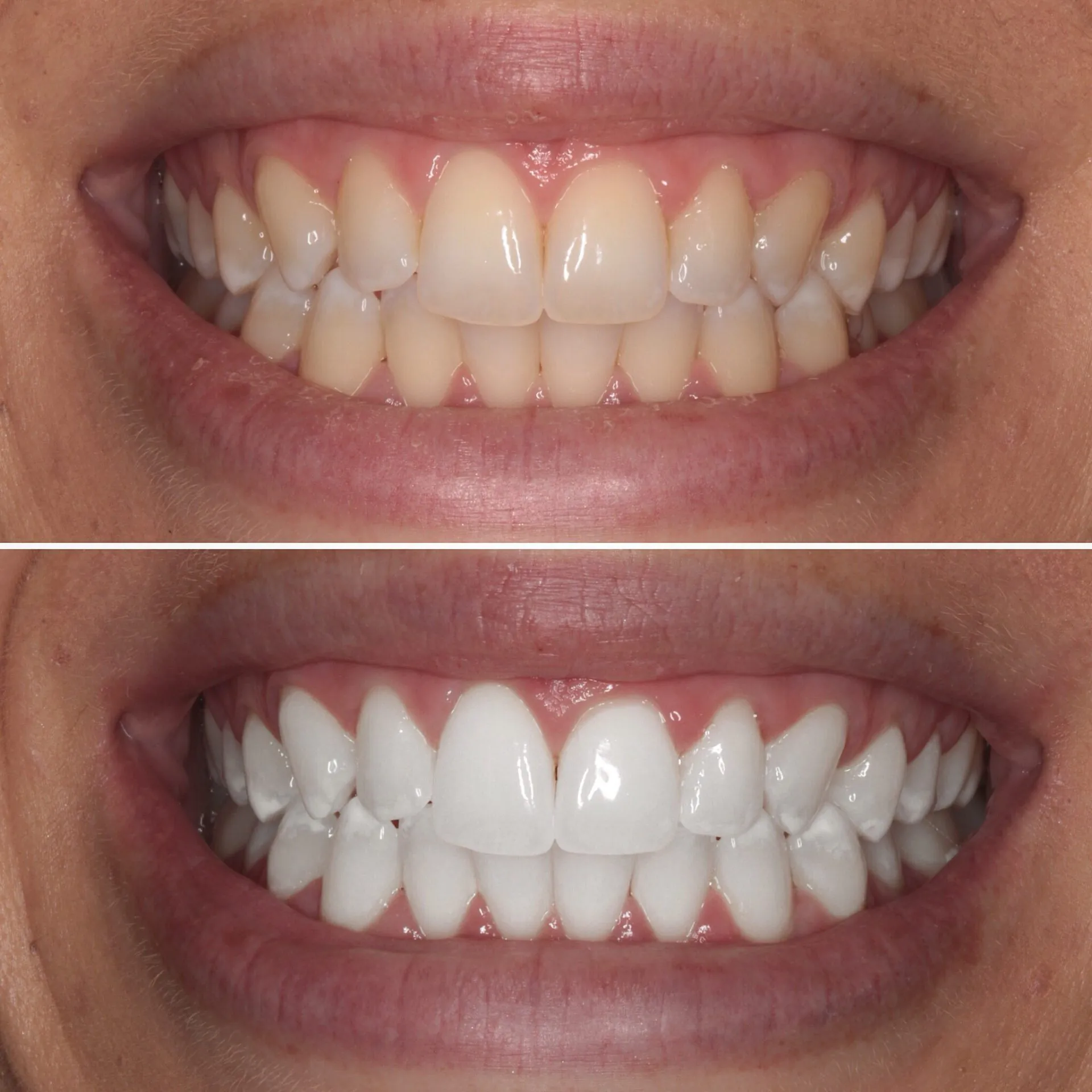
Professional teeth whitening uses bleaching agents to lighten suitable natural teeth. The result depends on the cause of discolouration and the starting shade. Before whitening, the dentist should check for cavities, gum inflammation, exposed roots, cracks and visible restorations because these can affect sensitivity and the final appearance. Crowns, veneers and tooth-coloured fillings do not whiten like natural enamel. Patients who already have sensitive teeth may need a modified plan, desensitising measures or treatment of the underlying problem before bleaching.
Whiter is not always better. A natural-looking target shade, the starting colour and the cause of staining all affect what can be achieved safely. Deep internal discolouration or a single dark tooth can need a different approach from general surface staining.
If you are planning bonding, veneers or crowns, tell the dentist before whitening. The timing matters because restorative materials are colour-matched and do not respond to bleaching after placement.
Treatment is planned after an in-person examination; imaging is used when it is expected to change diagnosis or treatment planning.
Whitening is most useful when natural teeth have become darker from food, drinks, tobacco or ageing and the teeth and gums are otherwise healthy. It is not a treatment for every type of discolouration, and existing fillings, crowns and veneers do not whiten like natural enamel.
Your natural teeth have become darker or yellow with time
Tea, coffee, tobacco or other habits have caused external staining
You want a brighter smile before an event or cosmetic treatment
You have sensitive teeth and want a dentist to check whether whitening is appropriate
You want to understand whether existing crowns or fillings will create a shade mismatch
Before whitening, it helps to identify why the teeth look dark and whether sensitivity, cavities, gum recession or visible restorations will affect the result.
A professionally applied whitening system can produce a faster change in colour. Gum protection and sensitivity management are important parts of the appointment.
Custom trays or a prescribed home protocol can whiten more gradually and may allow sensitivity to be managed by adjusting frequency and contact time.
Crowns, veneers and composite fillings will not lighten with whitening gel. If they are visible, the sequence may need to be planned so replacement shades are chosen after the natural teeth stabilise in colour.
Temporary cold sensitivity can occur. Desensitising toothpaste, spacing sessions or changing the protocol may help, but sharp persistent pain should be checked for another dental cause.
These are common concerns patients raise when deciding whether to book, when something feels different after treatment, or when they are unsure whether they should wait or ask for a review.
Temporary sensitivity is one of the most common concerns after whitening. It can feel like short sharp zingers or general sensitivity to temperature. If the discomfort is significant, do not keep repeating the same whitening cycle just to finish the course. Pause and contact the dentist for advice about desensitising products or a gentler protocol.
Pain isolated to one tooth, especially pain on biting or throbbing that persists after the whitening session, should not automatically be labelled normal whitening sensitivity. A crack, cavity, bite issue or pre-existing pulp problem may need assessment. Whitening can draw attention to a tooth that already had an underlying problem.
Whitening gel can irritate the gums if it contacts soft tissue. Mild short-lived irritation may settle, but significant pain, ulceration, swelling or symptoms that persist should be reviewed. Do not continue placing bleaching material onto sore gums without advice.
Bleaching works on natural tooth structure, not on ceramic crowns, veneers or existing composite fillings. If a visible crown matched the old tooth shade, it may look darker after the natural teeth are whitened. This should be discussed before treatment so the timing of any replacement restoration is clear.
We check the teeth and gums, identify visible restorations and discuss the type of discolouration and the realistic shade change for your smile.
If you already have sensitivity, exposed roots, cracks or cavities, these issues may need attention before bleaching. The whitening protocol can be adjusted to your risk.
Soft tissues are protected and the whitening material is applied according to the selected in-clinic protocol. The treatment is stopped or modified if sensitivity becomes excessive.
The result is reviewed, and you receive guidance on short-term sensitivity, staining habits and whether any visible restorations need separate cosmetic planning.
These links are here only where the treatments genuinely overlap, so you can compare options without jumping through a long list of unrelated pages.
Digital smile design in Gurgaon for patients considering bonding, veneers, whitening or orthodontic changes, with preview-led planning where suitable.
Read treatment guide General DentistryTooth-coloured dental fillings in Gurgaon for cavities, small chips and failing restorations, with conservative decay removal where suitable.
Read treatment guide Restorative DentistryDental crowns and bridges in Gurgaon to strengthen damaged teeth or replace selected missing teeth using ceramic, zirconia and other restorative options.
Read treatment guideWhitening is commonly used when the teeth and gums are healthy and the product is used appropriately. A dental examination helps identify cavities, cracks, gum inflammation or restorations that could change the risk or result.
Same-week appointments most days. WhatsApp us a quick photo of what’s bothering you and we’ll come back with a likely plan before you arrive.