1
Conventional removable dentures
Full or partial dentures remain a practical option for many patients. Fit, extension, bite and review adjustments are important because the mouth changes over time.
Rebuild chewing, comfort and confidence when several or all teeth need restoration or replacement.
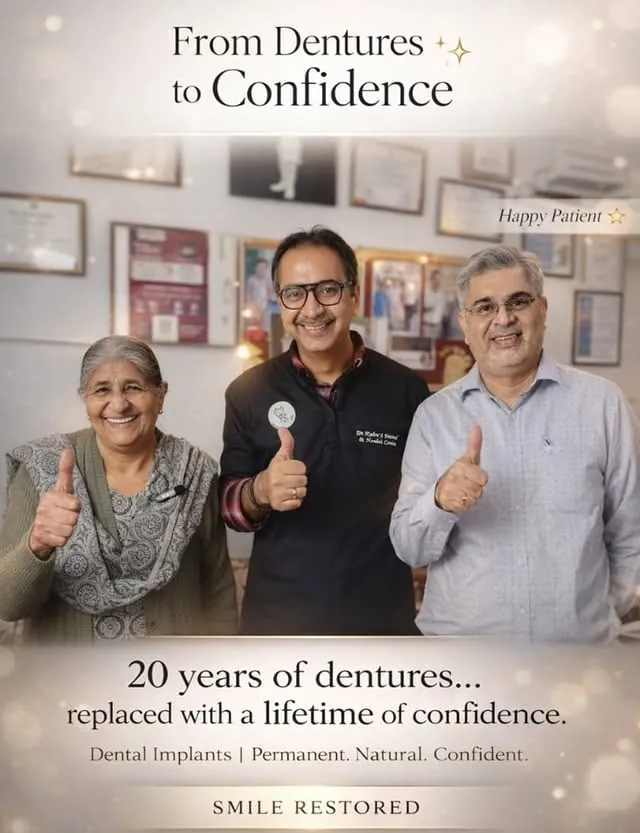
Full-mouth rehabilitation is a coordinated plan for patients with multiple missing, worn, broken or failing teeth. Depending on the teeth that can be preserved, gum and bone health, bite and budget, options may include removable dentures, crowns and bridges, implant-retained dentures, fixed implant restorations or a combination. Patients often focus on whether teeth can be made fixed, but comfort, speech, cleaning, repairability and long-term maintenance matter just as much. The goal is to create a stable bite and a result you can actually maintain, not simply to replace every visible tooth.
A strong full-mouth plan explains the prognosis of each remaining tooth before extractions are started. Ask which teeth can be saved, which are strategically useful and how the final prosthesis will be repaired or modified if the mouth changes later.
New dentures often need an adaptation period and adjustment visits. Sore spots should be adjusted professionally rather than endured or modified at home, because removing too much material can permanently alter the fit.
Treatment is planned after an in-person examination; imaging is used when it is expected to change diagnosis or treatment planning.
A full-mouth consultation is useful when many teeth are missing, repeatedly breaking, heavily restored or difficult to chew with, or when an existing denture has become loose and uncomfortable. The first goal is to decide which teeth are worth preserving and what type of final bite can be maintained realistically.
You are missing many or all teeth
Existing dentures are loose, uncomfortable or difficult to chew with
Several teeth are worn, broken or heavily restored
You want to compare removable dentures with implant-supported options
Your bite and appearance need to be rebuilt as part of one coordinated plan
There is rarely only one possible plan. Removable dentures, tooth-supported restorations and implant-supported options can be combined differently depending on health, bone, budget and maintenance preferences.
Full or partial dentures remain a practical option for many patients. Fit, extension, bite and review adjustments are important because the mouth changes over time.
A small number of implants can sometimes improve the stability of a removable prosthesis while still allowing it to be removed for cleaning.
Full-arch fixed options can provide greater stability but require surgery, sufficient support and a long-term cleaning and maintenance plan beneath the prosthesis.
When useful natural teeth remain, selected crowns, bridges or partial dentures may allow them to contribute to support rather than removing every tooth automatically.
These are common concerns patients raise when deciding whether to book, when something feels different after treatment, or when they are unsure whether they should wait or ask for a review.
New dentures can feel bulky at first, and eating and speech usually require an adaptation period. Sore spots are common enough that review visits are part of the fitting process, but a painful pressure area should not simply be tolerated. Small adjustments can improve comfort without remaking the entire denture.
Implant-supported teeth can provide more stability, especially for a difficult lower denture, but surgery, cost, cleaning and maintenance need to be considered. Conventional dentures remain a valid option for many patients. The right choice depends on bone, health, expectations, budget and whether some natural teeth can be preserved.
The jaw changes after teeth are lost, and removable dentures do not stop that biological remodelling. This is one reason dentures may need relining or replacement over time. Implant support can change how forces are managed, but it also introduces its own maintenance needs. Ask how the plan affects future options rather than assuming one solution is permanent forever.
A badly damaged mouth does not automatically mean every tooth should be extracted. Some teeth may be useful for support or can be restored, while others may have a poor prognosis. The decision should consider the condition and strategic value of each tooth and the final prosthetic plan before extractions are done.
We assess which teeth can be preserved, gum and bone health, the bite, jaw relationship, smile and existing dentures or restorations.
Removable, tooth-supported and implant-supported alternatives are compared in terms of comfort, stability, cleaning, repairs, treatment time and cost.
Disease is controlled first, hopeless teeth are managed where necessary and the bite is stabilised before the final teeth or prosthesis are completed.
New dentures and full-mouth restorations often need review visits for bite or pressure adjustments. Long-term maintenance is planned around the teeth, gums and implants that remain.
These links are here only where the treatments genuinely overlap, so you can compare options without jumping through a long list of unrelated pages.
Dental implant treatment in Gurgaon for single teeth, multiple missing teeth and full-mouth rehabilitation, including immediate-loading options for suitable patients.
Read treatment guide Restorative DentistryDental crowns and bridges in Gurgaon to strengthen damaged teeth or replace selected missing teeth using ceramic, zirconia and other restorative options.
Read treatment guide Periodontal CareGum disease treatment in Gurgaon for bleeding gums, bad breath, gum inflammation, loose teeth and periodontal problems, with care based on disease severity.
Read treatment guideThe best option depends on oral health, available bone, medical history, expectations, budget and willingness to undergo implant treatment. A useful consultation compares removable and implant-supported solutions for your specific mouth rather than presenting one as universally superior.
Same-week appointments most days. WhatsApp us a quick photo of what’s bothering you and we’ll come back with a likely plan before you arrive.