1
Crown for a weakened tooth
A tooth with a large fracture, extensive filling or major loss of structure may need cuspal coverage to reduce the risk of further breakage, especially after some root canal treatments.
Restore strength, function and appearance with a restoration designed for your bite.
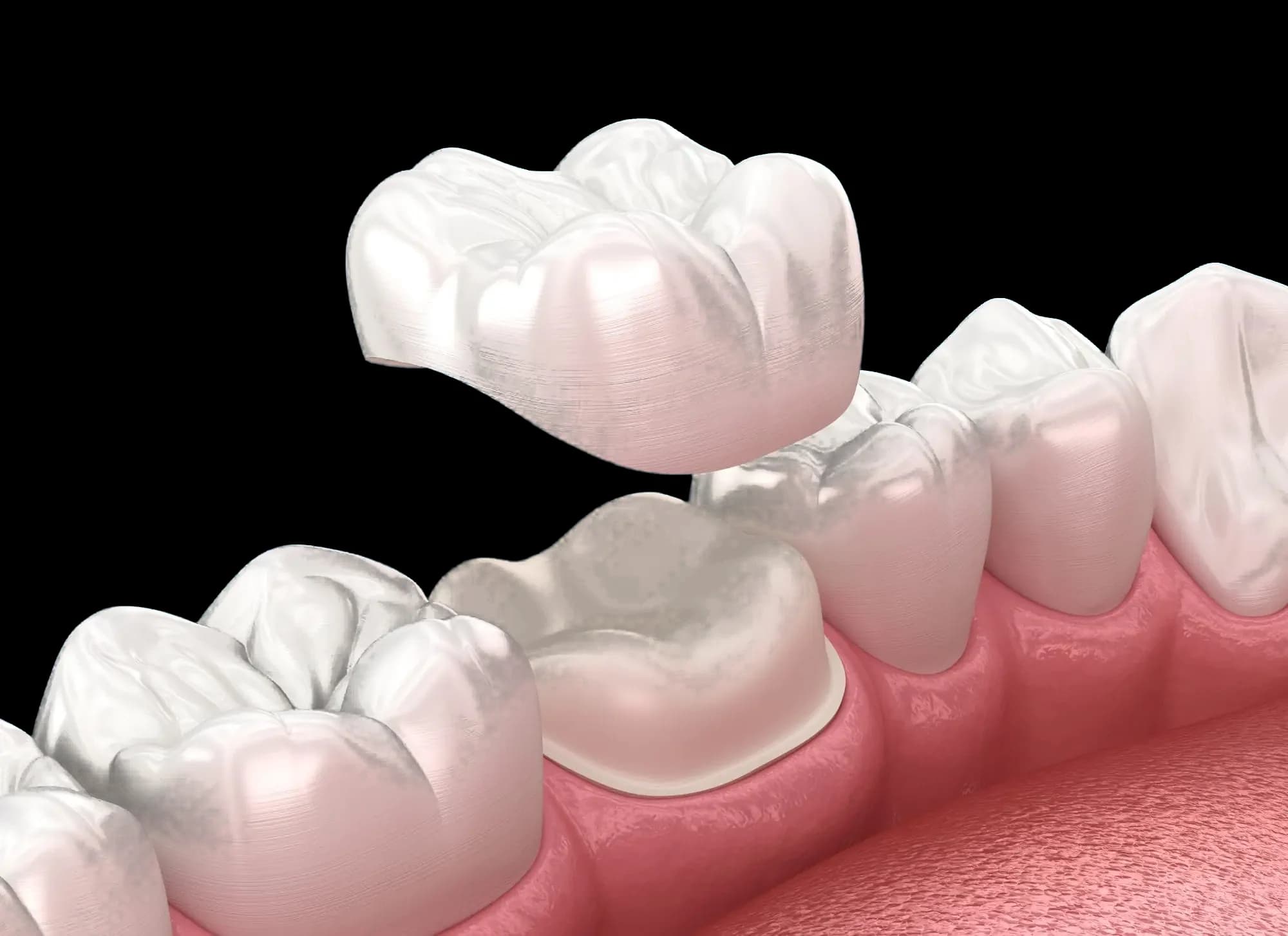
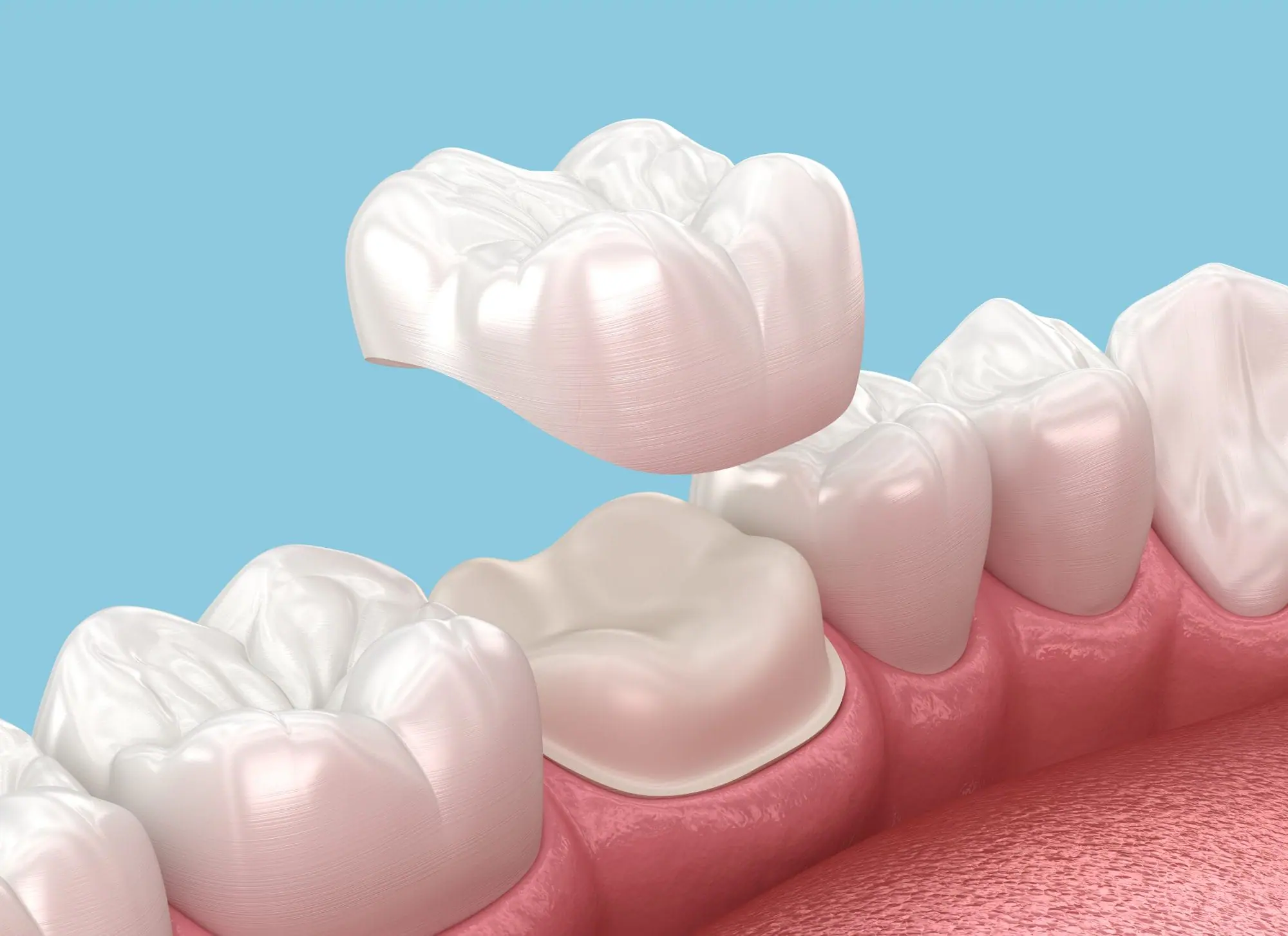
A crown covers and protects a weakened tooth, while a bridge replaces one or more missing teeth by connecting a replacement tooth to supporting teeth or implants. The restoration has to do more than look good: it must fit the tooth or implant, contact neighbouring teeth properly, allow cleaning and meet the opposing teeth comfortably. Material selection depends on the location, bite forces, available space and aesthetic requirements. A crown is not automatically the right answer for every cracked or root-canal-treated tooth, and a bridge is only one of several ways to replace a missing tooth.
Ask whether the tooth truly needs full coverage or whether a more conservative bonded restoration could work. The answer depends on cracks, remaining walls, previous restorations, bite forces and the amount of sound enamel available for bonding.
For a missing tooth, compare a bridge, implant and removable option on treatment time, effect on neighbouring teeth, cleaning and future repair—not only the initial price.
Treatment is planned after an in-person examination; imaging is used when it is expected to change diagnosis or treatment planning.
Crowns are used when a tooth needs more protection or shape correction than a filling can provide. Bridges replace missing teeth by connecting a replacement tooth to supporting teeth or implants. The best option depends on the strength of the remaining teeth, bite and how much healthy structure can be preserved.
You have a cracked, broken or heavily restored tooth
A root-canal-treated tooth needs additional protection
You are missing one or more teeth and want to compare bridge and implant options
An older crown or bridge is loose, chipped, painful or no longer fits well
You have a tooth that is worn down or structurally weak but still restorable
Material choice is only one part of the plan. The tooth underneath, gum health, bite, appearance and cleaning access influence how predictable the restoration will be.
A tooth with a large fracture, extensive filling or major loss of structure may need cuspal coverage to reduce the risk of further breakage, especially after some root canal treatments.
A conventional bridge may be suitable when neighbouring teeth already need crowns or can support the load. If those teeth are untouched and healthy, an implant may also be worth comparing.
Ceramic, zirconia, metal-ceramic and other materials differ in appearance, thickness requirements and behaviour under load. The location of the tooth and the bite help guide the choice.
A crown or bridge that looks good but hits too heavily can become uncomfortable. Final bite checks and a practical cleaning method under bridgework are important for long-term maintenance.
These are common concerns patients raise when deciding whether to book, when something feels different after treatment, or when they are unsure whether they should wait or ask for a review.
A crown that contacts before the other teeth can feel sore when chewing and may make the tooth or jaw muscles uncomfortable. Some post-treatment awareness can occur, but a clearly uneven bite should be checked. Small bite adjustments can make a large difference when the restoration is otherwise sound.
Sensitivity can occur after a tooth is prepared, especially if the nerve was already irritated. The pattern matters: short sensitivity that is settling is different from spontaneous throbbing, lingering hot-and-cold pain or worsening pain on biting. Persistent symptoms may require reassessment of the tooth, bite and pulp health.
A bridge uses neighbouring teeth or implants for support, while a single implant can replace a missing tooth without preparing the adjacent natural teeth. Bone, gum health, the condition of neighbouring teeth, treatment time, cost and maintenance all influence the decision. Neither option is automatically best for every gap.
A loose crown, recurrent decay, cement breakdown or food trapping can create unpleasant taste, odour or sensitivity. Do not repeatedly recement a loose crown at home. The tooth under the crown needs to be checked because the restoration may be repairable, replaceable or, in some cases, the tooth may need additional treatment.
We assess the tooth, gums, bite and X-ray findings when required and explain whether a filling, onlay, crown, bridge or implant-based option is more appropriate.
The tooth or implant site is prepared and accurate digital or conventional records are taken. A temporary restoration may be used while the final crown or bridge is made.
The restoration is checked for fit, contact points, shade, appearance and bite before final cementation or fixation.
Cleaning instructions are tailored to the restoration. Bridges need cleaning under the replacement tooth, and all crowns need careful plaque control at the gum margin.
These links are here only where the treatments genuinely overlap, so you can compare options without jumping through a long list of unrelated pages.
Root canal treatment in Gurgaon for infected or inflamed teeth, with diagnosis, cleaning, sealing and restoration planning to preserve the natural tooth when possible.
Read treatment guide Implant DentistryDental implant treatment in Gurgaon for single teeth, multiple missing teeth and full-mouth rehabilitation, including immediate-loading options for suitable patients.
Read treatment guide Cosmetic DentistryDigital smile design in Gurgaon for patients considering bonding, veneers, whitening or orthodontic changes, with preview-led planning where suitable.
Read treatment guideA crown covers an individual tooth or implant, while a bridge replaces a missing tooth or teeth by connecting the replacement to supporting teeth or implants.
Same-week appointments most days. WhatsApp us a quick photo of what’s bothering you and we’ll come back with a likely plan before you arrive.