
1
Preventive monitoring
Very early non-cavitated lesions can sometimes be managed with improved plaque control, fluoride and diet changes rather than immediate drilling, provided they are monitored appropriately.
Repair cavities and small defects while preserving as much healthy tooth as possible.
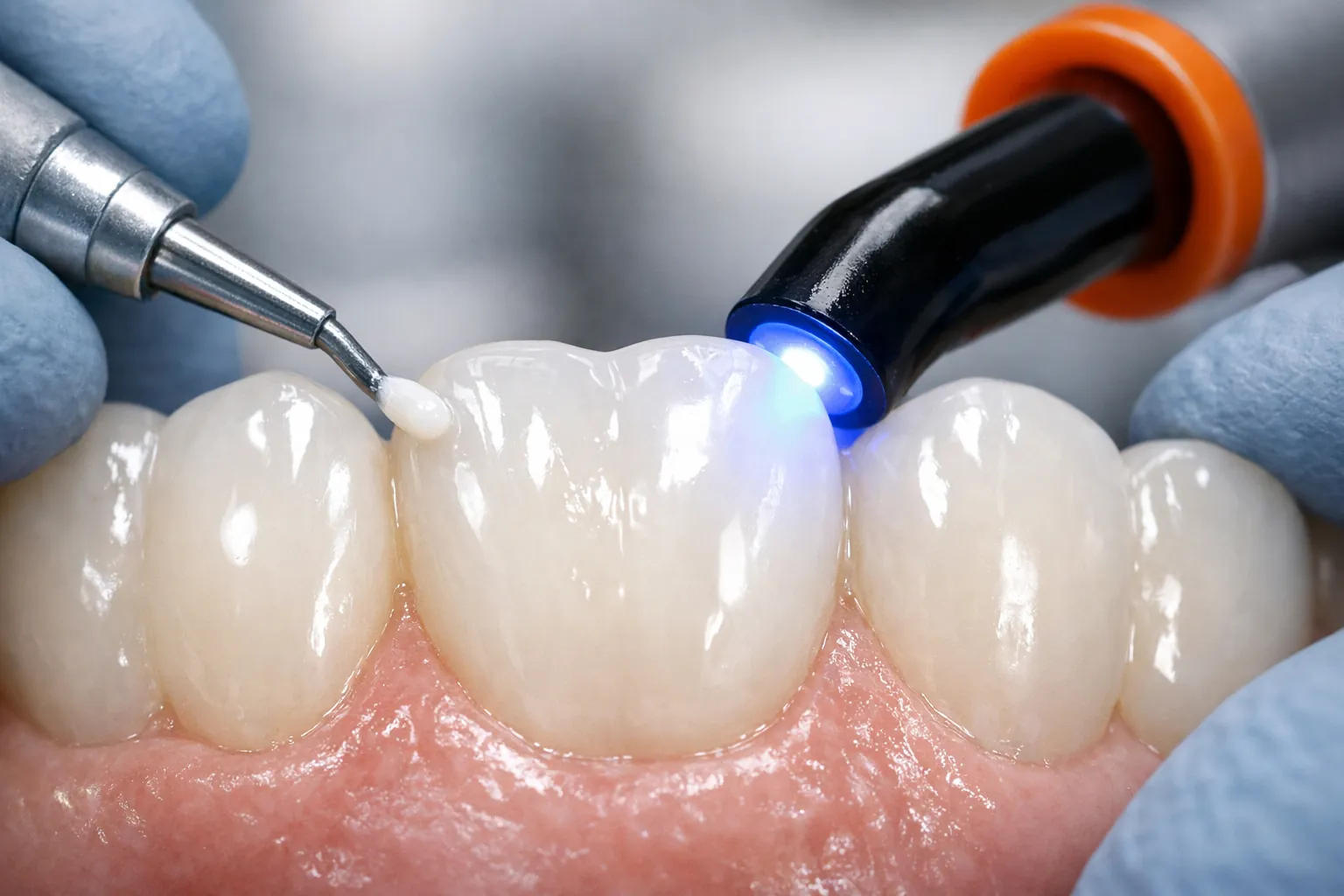
Composite dental fillings are bonded tooth-coloured restorations used to repair many small to moderate cavities, chips and worn areas. The important part is not simply placing the filling; the dentist must decide how deep the decay is, whether the tooth is cracked, how much healthy tooth can be preserved and whether the bite will place heavy force on the restoration. After the filling, some teeth are temporarily sensitive, but strong biting pain, a feeling that the tooth hits first or sensitivity that is worsening deserves review.
A common concern after a new filling is sensitivity. Short-lived cold sensitivity can occur, especially with deeper cavities, but a filling that feels too high or causes increasing pain on biting should be reviewed because a small bite adjustment may make a big difference.
If a filling repeatedly breaks, the problem may be the size of the restoration, an underlying crack or heavy bite forces. Replacing the same filling again is not always the best long-term solution.
Treatment is planned after an in-person examination; imaging is used when it is expected to change diagnosis or treatment planning.
Early decay may cause no pain. Sensitivity to sweets or cold, food trapping, a rough edge, a visible dark area or a broken old filling are common reasons to book an examination. The earlier the problem is diagnosed, the more tooth structure can often be preserved.
You have a cavity or visible tooth decay
An old filling is chipped, leaking, rough or discoloured at the edge
A small piece of tooth has chipped away
You have sensitivity that may be related to a cavity or failing filling
Food repeatedly catches around an older restoration
The treatment depends on whether the lesion is still limited to enamel, has formed a cavity, is close to the nerve or has already caused a crack or infection.
Very early non-cavitated lesions can sometimes be managed with improved plaque control, fluoride and diet changes rather than immediate drilling, provided they are monitored appropriately.
Composite can restore many small to medium cavities and chipped areas. The dentist removes diseased tooth tissue, bonds the material and shapes it to the bite.
When a tooth has lost more structure, an inlay, onlay or other cuspal-coverage restoration may provide better support than repeatedly making a very large direct filling.
Deep decay can irritate or infect the pulp. Persistent spontaneous pain, swelling or lingering temperature pain may mean the tooth needs more than a simple filling.
These are common concerns patients raise when deciding whether to book, when something feels different after treatment, or when they are unsure whether they should wait or ask for a review.
Short-term sensitivity can happen, especially after a deeper filling, because the tooth has been irritated by decay and treatment. Patients often worry when the tooth feels different from previous fillings. The trend is important: sensitivity that is gradually reducing is different from pain that lingers, throbs or is becoming stronger.
A filling that is slightly high can make a tooth painful when chewing even if an X-ray looks normal. A crack or other tooth problem can also cause biting pain. If the tooth feels like it contacts first or you have to avoid chewing on that side, a bite check is appropriate.
A new filling can change the contact point between teeth. If food packs into the area, floss shreds or catches, or the gum becomes repeatedly sore, the shape and contact of the filling should be checked. Food trapping is not something you should simply accept as the new normal.
A deep cavity can irritate the pulp even when the goal is to save the tooth with a filling. Some teeth settle; others develop persistent symptoms that indicate the pulp is not recovering. The need for root canal treatment is based on the symptoms, examination and tests—not solely on how deep the filling looks on an X-ray.
The tooth is examined and dental imaging is used when needed to assess the depth of decay, cracks and the condition of the surrounding tooth.
After local anaesthesia when required, diseased tooth structure is removed and the composite restoration is bonded in layers while preserving healthy tooth where possible.
The filling is shaped so food does not easily pack between teeth and floss can pass with appropriate resistance.
The restoration is polished and the bite is checked. This final step matters because a filling that is slightly high can make chewing uncomfortable.
These links are here only where the treatments genuinely overlap, so you can compare options without jumping through a long list of unrelated pages.
Root canal treatment in Gurgaon for infected or inflamed teeth, with diagnosis, cleaning, sealing and restoration planning to preserve the natural tooth when possible.
Read treatment guide Restorative DentistryDental crowns and bridges in Gurgaon to strengthen damaged teeth or replace selected missing teeth using ceramic, zirconia and other restorative options.
Read treatment guideComposite materials are available in multiple shades and can usually be blended with the surrounding tooth. The final appearance depends on the size and location of the restoration and the natural tooth colour.
Same-week appointments most days. WhatsApp us a quick photo of what’s bothering you and we’ll come back with a likely plan before you arrive.